Central Chile: Santiago to the Araucaria Forests
On our Birding Central Chile tour, we’ll explore all the major habitats of the region in search of its rich avian diversity, including seven Chilean endemic species. Our journey takes us from the highlands above Santiago to the temperate Nothofagus forests of the south, with birding stops at interior and coastal wetlands along the way. A highlight of the itinerary is a fantastic pelagic trip into the nutrient-rich waters of the Humboldt Current, where we’ll have the chance to see multiple species of albatross and a variety of other tubenoses.
The range of landscapes we’ll encounter is truly spectacular. Accommodations are comfortable, the local cuisine is delicious, and Chile’s world-renowned wines are an added delight. The climate varies from warm and dry around Santiago to cooler and temperate further south. Throughout the trip, we’ll place a strong focus on finding Chile’s endemics and near-endemic species.
NEXT DEPARTURE:
2026
October 22nd-30th, 2026
Birding Central Chile can be be extended to include a pre-tour extension to Northern Chile, a post-tour extension to Patagonia, or both as an All of Chile package.
For more details of pricing and the itinerary please use the Contact Form.
Private trips can be organized upon request.
ITINERARY SUMMARY:
Day 1 – Thursday, October 22nd: Arrival Santiago
Day 2 – Friday, October 23rd: Birding Farellones and Valle Nevado
Day 3 – Saturday, October 24th: Full Day on the Pacific Coast
Day 4 – Sunday, October 25th: Pelagic trip off Valparaiso and coastal birding
Day 5 – Monday, October 26th: The Yeso Valley and High Andes
Day 6 – Tuesday, October 27th: Colbún Lake and Vilches
Day 7 – Wednesday, October 28th: Altos de Lircay National Reserve
Day 8 – Thursday, October 29th: Cerro Ñielol and Temuco
Day 9 – Friday, October 30th: Araucaria forest – Flight Santiago to Santiago
Highlights
- A comprehensive trip through all habitats of Central Chile.
- All central Chile’s endemic species.
- Southern cone endemics of the temperate forests.
- Incredible landscapes, from high mountains to prehistoric Araucaria forests.
Pace
- Relaxed to moderate pace. Days at higher elevation can be a bit more tiring, but good hydration and early nights will help everyone feel fit.
Ease of Birding
Most species are relatively easy to observe, with Chilean endemics and specialties generally being quite reliable. While some forest and understory birds can be elusive, playback is often effective in bringing them into view.
A few species, such as Tinamous and Seedsnipes, occur at low densities and may require a bit more patience and effort to find.
- Accommodation as specified (or similar), based on twin/double occupancy.
- Full board (all meals included, B – Breakfast, L – Lunch, BL – Box Lunch, D – Dinner)
- Daily snack (fruit, nuts, cereal bars and water).
- Private transportation in a VAN or Sprinter, including all associated costs (fuel, ferries, tolls, etc.).
- One pelagic trip of six hours (Valparaíso).
- Hotel pick-up and drop-off.
- Entrance fees to all designated parks and reserves:
- Yerba Loca Park.
- Yeso Valley Park.
- Altos de Lircay Natural Reserve.
- Cierro Ñielol Natural Monument.
- English-speaking guide equipped with spotting scope and playback gear.
- eBird checklists.
- Basic travel insurance (Assist Card).
- Tips for restaurant waitstaff.
- Single room supplement
- Domestic flights (Temuco–Santiago; estimated cost: US$150–US$300)
- International flight tickets
- Alcoholic beverages.
- À la carte meals
- Extra transfers or assistance outside the main tour itinerary (available upon request)
- Bank and visa processing fees
- Excess baggage charges
- Additional nights caused by flight cancellations or delays
- Early check-in or late check-out at hotels.
- Any item not mentioned before.
Itinerary
Upon arrival in Santiago, you will be met at the airport and transferred to your hotel in Santiago. Check-in is available from approximately 3:00 pm. In the evening, your birding and wildlife guide will meet you at the hotel to review the itinerary, answer any final questions, and discuss important details before the trip begins. Overnight in Santiago.
Central Chile is one of the world’s five Mediterranean Ecoregions, defined by cold, rainy winters and hot, dry summers. Bounded by the towering Andes to the east, the Atacama Desert to the north, and the Pacific Ocean to the west, this region’s isolation has fostered remarkable rates of endemism in both flora and fauna—earning it a spot among the 25 Global Biodiversity Hotspots.
On our first full day in the Santiago area, we’ll explore the Mediterranean scrublands of the Andean foothills and ascend into alpine habitats, making several stops at varying elevations. Here, we’ll search for high-altitude specialists such as Greater Yellow-finch, Creamy-rumped Miner, and White-sided Hillstar, along with other notable Andean birds.
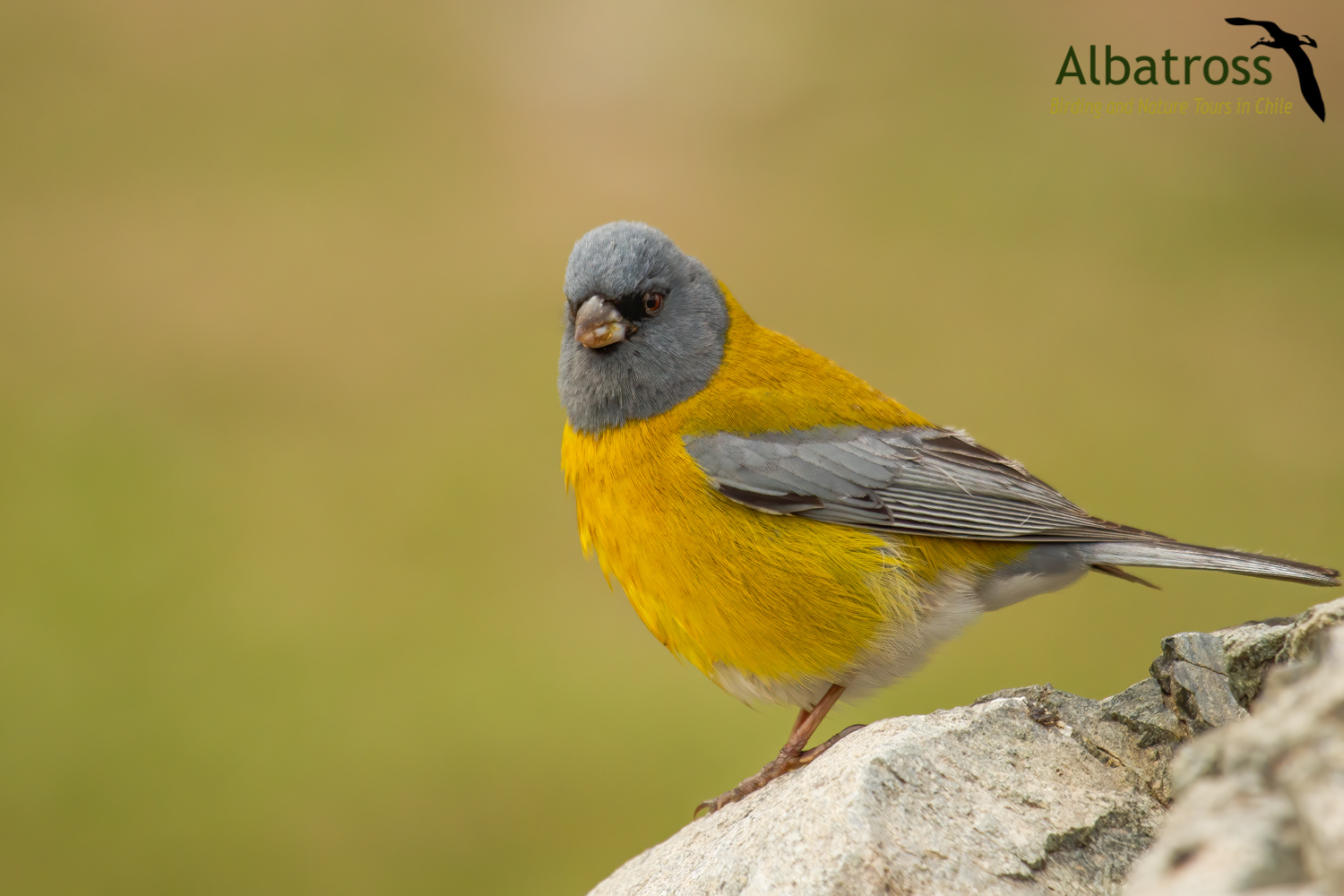
At our lunch spot, we often enjoy Andean Condors soaring overhead, while Rufous-banded Miner, Gray-hooded Sierra-Finch, and Greater Yellow-finch come close, searching for crumbs left behind from lunch. We’ll also keep an eye out for Variable Hawk, Black-chested Buzzard-Eagle, and Mountain Caracara.
In the surrounding foothills, we’ll focus on six Chilean endemics: Chilean Tinamou, Moustached Turca, White-throated and Dusky Tapaculos, Crag Chilia, and Dusky-tailed Canastero.
This day offers a perfect introduction to the birds of Central Chile—from widespread species to local specialties. As we climb into higher elevations easily reached from Santiago, we’ll also be rewarded with spectacular mountain views. In the afternoon, we’ll return to the hotel. Night in Santiago.
Leaving early from Santiago, we’ll head to the coastal city of San Antonio, the starting point for a full day of birding along Chile’s Pacific coast. Just south of the city, we’ll visit a recently established reserve at the Maipo River estuary—one of central Chile’s most important wetlands. Here, we’ll enjoy large flocks of gulls, Black Skimmers, terns, pelicans, and a variety of shorebirds.
The reedbeds near the reserve entrance offer great opportunities to spot the stunning but elusive Many-colored Rush-Tyrant and Wren-like Rushbird, as well as Yellow-winged Blackbird and Sedge Wren.
Along the beach, seawatching may yield sightings of Red-legged and Guanay Cormorants, Peruvian Boobies, and even Chilean Skuas. After scanning the mudflats for migrant shorebirds and possible rarities, we’ll turn our focus to passerines, searching for the rare Ticking Doradito (a recent split from Warbling Doradito), Spectacled Tyrant, Correndera Pipit, and the Chilean endemics Dusky Tapaculo and Dusky-tailed Canastero.
Driving north along the coast, we’ll stop for lunch at a seaside restaurant on the rocky shore—an excellent spot to find the Chilean endemic, the Chilean Seaside Cinclodes. In the afternoon, we’ll visit more protected wetlands, searching for Spot-flanked Gallinule, Black-necked and Coscoroba Swan, Plumbeous Rail, Black-headed Duck, and possibly the secretive Stripe-backed Bittern. Transfer to Valparaíso. Overnight.
We’ll depart just before sunrise, heading about 20 km (12 miles) offshore along the nutrient-rich Humboldt Current. The round trip usually takes around 6 hours. With over 4,000 kilometers of coastline, Chile ranks among the world’s top pelagic birding destinations. The abundant nutrients brought by the current support a remarkable diversity of marine life. Exceptional trips have recorded around 60 seabird species, including over half a dozen albatross species, as well as numerous petrels, shearwaters, diving-petrels, cormorants, gulls, and terns.
Albatrosses are undoubtedly the stars of the show. Commonly seen species include Salvin’s, Black-browed, Northern and Southern Royal, while Buller’s and Chatham Albatrosses appear less frequently.
Other noteworthy tubenoses include Masatierra, Juan Fernández, White-chinned, and Westland Petrels, as well as Peruvian Diving-Petrel, Northern Giant Petrel, and Wilson’s Storm-Petrel (with the local Fuegian subspecies). Rounding out the seabird list are Red Phalaropes, Guanay and Red-legged Cormorants, Kelp Gull, and South American Tern.
After our pelagic trip and a delicious lunch, we’ll continue birding along the coast north of Valparaíso, focusing on the scarce and elusive Stripe-backed Bittern and any coastal species we may have missed the previous day. Return to Santiago for the night.
The Yeso Valley is renowned as one of the most accessible locations to observe the elusive and striking Diademed Sandpiper-Plover. This beautiful and enigmatic mountain shorebird breeds in the valley’s high-elevation bogs and will be our primary target for the day.
At Albatross Birding, we’re proud to have led a long-term research project on this species, giving us deep insight into its behavior and an excellent track record for successful sightings. In addition to the Sandpiper-Plover, there are many other interesting species we’ll be stopping to look for as we make our way to higher elevations.
Among the highlights are the Chilean endemics Crag Chilia and Moustached Turca, as well as Torrent Ducks navigating fast-moving rivers. We’ll also encounter a variety of Andean specialties, including White-sided Hillstar, Andean Goose, Scale-throated Earthcreeper, Black-fronted and White-browed Ground-Tyrants, Greater Yellow-Finch, Yellow-rumped Siskin, soaring Andean Condors, and the striking Mountain Caracara. As we reach higher elevations, we’ll have the chance to spot more localized and rare species like Creamy-rumped Miner and Grey-breasted Seedsnipe.
The scenery here is nothing short of spectacular—towering mountains, turquoise lakes, hanging glaciers, and rushing white-water rivers create an unforgettable landscape. In the afternoon, we’ll return to Santiago. Night in Santiago.
Today we’ll begin driving south toward Talca and then onward to Colbún Lake. Still within the drier Mediterranean habitat, our main targets will be the spectacularly colorful and noisy Burrowing Parakeet, along with the beautiful Spectacled Duck. Upon arriving at the lake, we’ll scan for various ducks and grebes, and keep an eye out for Spectacled Tyrant and Andean Gull.
Next, we’ll take a short trip north of the lake to spend the afternoon and the following day exploring the magnificent Altos de Lircay National Reserve. At dusk, we’ll search for the elusive Rufous-Legged Owl before settling in for the night at a quiet, comfortable forest lodge in Vilches, just outside the reserve.
Located at the southern edge of the Mediterranean Region, this reserve lies in the ecotone—the transition zone between two distinct biomes—where the dry, scrubby Mediterranean habitat meets the lush temperate Nothofagus forests. Here, we’ll encounter a unique mix of bird communities from both environments.
In Altos de Lircay, we’ll encounter our first forest specialists. As we walk along the forest trails, participants will be captivated by the majestic mature Nothofagus trees, lush ferns, mosses, and bird species unique to the southern cone of South America. This area also features fascinating geological rarities to discover.
We’ll spend a full day exploring the extensive forests of Altos de Lircay. We’ll listen closely for the nasal scolding of Chile’s least-known Tapaculo, the Chestnut-throated Huet-Huet. We’ll also search for other Nothofagus forest specialties, including Austral Parakeet—the world’s southernmost parrot—Chucao Tapaculo with its explosive call, Magellanic Tapaculo, and the colorful Patagonian Sierra-Finch. This will be our first chance to see the truly spectacular Magellanic Woodpecker, and there’s also a possibility of spotting the rare and elusive Chilean and White-throated Hawks. In the afternoon, we’ll return to our accommodation in Vilches.
After breakfast at our hostería, we’ll head south toward Temuco, the capital of the Araucanía Region. Along the way, we’ll stop in open, meadow-like agricultural areas to search for Screaming Cowbird, Hellmayr’s Pipit, and Chilean Tinamou. By the time we arrive in Temuco, the Mediterranean habitat will have given way completely to lush temperate rainforest.
Once in Temuco, participants will visit Cerro Ñielol Natural Monument, home to dense rainforest understory species such as Black-throated Huet-Huet, Des Mur’s Wiretail, Chucao Tapaculo, Ochre-Flanked Tapaculo, and the near-endemic Slender-billed Parakeet. The surrounding forests also offer a good chance to spot the uncommon Rufous-Tailed Hawk. Overnight in Temuco.
In the morning, we’ll venture into higher-altitude mixed Nothofagus and Araucaria (Monkey Puzzle) forests, set against stunning mountainous landscapes. Here, we’ll search for the recently split Patagonian Forest Earthcreeper, Magellanic Tapaculo, Austral Parakeet, Striped Woodpecker, Chilean Flicker, White-throated Treerunner, and other forest species.
Today will be equally about enjoying these fantastic forest birds and soaking in the magic of the ancient woodland. The iconic silhouettes of Araucarias on the hillsides, framed by snow-capped volcanoes on the horizon, create the feeling of stepping into a truly prehistoric forest. After a full day of birding, we’ll transfer to Temuco airport for a short evening flight back to Santiago.
End of our services for the trip.
Gallery