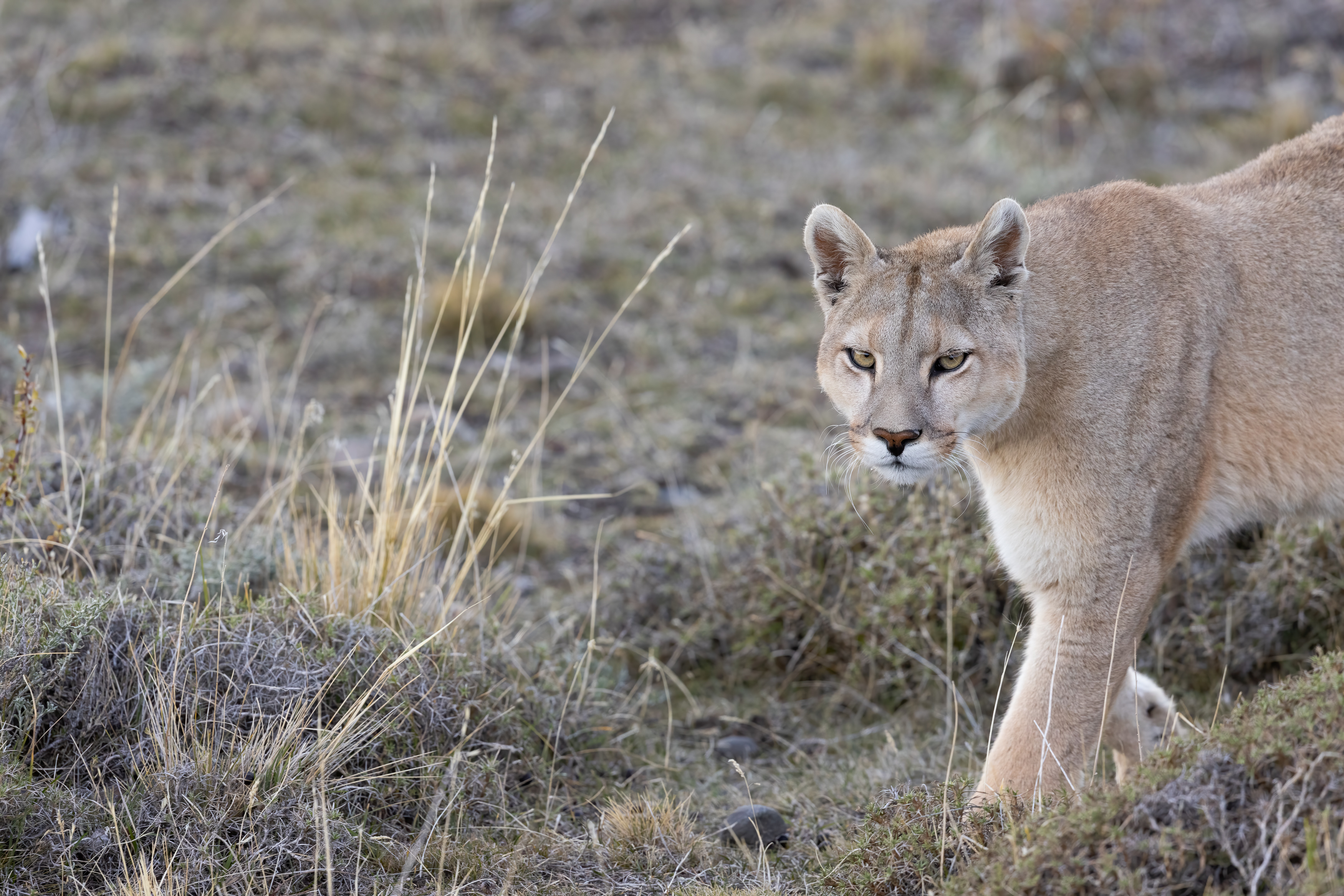
Puma Photo Safari in Torres del Paine
The rolling hills in and around Torres del Paine are perhaps the best place in the world to observe Pumas in their habitats; lounging, stalking, hunting, and caring for their youngs. This vast landscape is home to large herds of Guanaco, their main prey, and the world-famous massif of the Torres del Paine are an absolutely stunning backdrop for days out in the field. The opportunities of capturing spectacular images during our Puma Photo Safari are second to none. We’ll be aided by professional Puma trackers that know the local population and their habits.
Trips can be organized throughout the year. In the winter the parks sees less traffic and allows for photos of the Pumas contrasted to the snowy landscape. In any case, these big cats are a true spectacle and an absolute joy to photograph regardless of the time of the year.
This experience will take place within the facilities of our partner, La Leona Amarga, a privileged area that allows controlled and responsible access to one of the territories with the highest presence of pumas in the region.
NEXT DEPARTURES:
- June 29th–July 04th, 2026 (Fully Booked)
- June 21st-26th, 2027
Private trips can be organized year around as requested
Request price and itinerary on Contact Form
ITINERARY SUMMARY:
Day 1. Punta Arenas to Torres del Paine.
Day 2 – 5. Full Days of Puma photography.
Day 6. Return to Punta Arenas.
Highlights
- Pumas in their natural habitat
- Stunning Patagonian landscape photography
- Plenty of other Patagonian wildlife
Pace
- Relaxed pace. Early starts and days stretching until dusk out in the field, but during midday there will time to relax and rest. However, the itinerary is flexible, so it can accommodate those that wish for a more intensive pace.
- Accommodation specified or similar based on a double room.
- Private transport and all the cost involved (gas, ferries, toll, etc.)
- Full board (all meals included, starting and ending with the lunch/box lunch).
- Birding-wildlife English speaking guide/driver.
- Torres del Paine park entrance fee.
- Travel assistance insurance during the whole trip.
- Entrance fees for 4 days at a private ranch La Leona Amarga, home to wild pumas.
- 4 days of Professional Puma Tracker (a mandatory requirement for accessing the ranch and searching for Pumas)
- e-Bird check list
- Tips for waitstaff
- Additional Single room supplement.
- Internal Flights (Santiago – Punta Arenas – Santiago), referential price U$250-350 per person.
- Alcoholic drinks.
- Á la carte dishes.
- Extra transfers or assistance not included in the main tour (prices by request).
- International flight tickets.
- Bank and visa fees.
- Excess baggage charges.
- Additional nights during the trip due to flight cancellations.
- International or lost property insurance
Itinerary
Starting from Punta Arenas we’ll drive north towards Torres del Paine National Park, where we’ll be immersed in some of the most spectacular scenery in the country and arguably the best place in the world to see and photograph Pumas. We’ll break up the drive (~4 hrs) with an early lunch in the pleasant town of Puerto Natales, nestled on the edge of the fjords. Arriving at the park we’ll get to know and familiarize ourselves with the areas in the park and adjoining reserves where Pumas are regularly seen.
This will be our first introduction to the landscape and the wildlife inhabiting the scrubby steppe and small lagoons. Nearing dusk we’ll have our first chance at spotting Pumas. As nigh falls we’ll head back to our accommodation in the steppe for dinner and have the chance to discuss our plan for the next few days. Night in Cerro Castillo.
Dawn and dusk are the most active times for Pumas, also giving us the best light for photography. We’ll concentrate our efforts at these times of the day. With help from professional Puma trackers, we’ll scour the hills in search of Pumas, and relocate when one of the trackers spots them. The trackers will radio-in with the whereabouts of an individual or group, and give us instructions on the best way to approach so as to be at the optimal spot for photographing. Always at a safe distance and ensuring no disturbance. The photo opportunities are absolutely fantastic here as multiple families live in the area. Depending on the time of year, females can be seen with their cubs and stalking prey, or males prowling the hills.
During the ‘slower’ hours of the day we are free to explore other areas of the park, in search of interesting birds or other mammals. Birds of special note are: Andean Condor, Cinnamon-bellied Ground-Tyrant, Patagonian Mockingbird, Magellanic Woodpecker, and the recently re-discovered Austral Rail. Other mammals include: Southern Andean Deer, Guanaco, Patagonian Hog-nosed Skunk, Gray Fox, and Patagonian Haired Armadillo. Of course there are ample opportunities for fantastic landscape photography throughout the stay. Nights in Cerro Castillo.
On our final morning, we will enjoy breakfast at the hotel before beginning our journey directly to Punta Arenas. We expect to arrive in the afternoon, and later that day, we will take our flight back to Santiago.
Gallery